The Joyful Botanist: Blowing in the windflower
Many years ago, I was given great advice on how to take better photographs, especially of subjects like the wildflowers that I love. That advice was to get the image focused and framed well, and then to take in a long breath, hold it and slowly breathe out. At the end of the exhale, snap the picture. This is similar to the concept of Chi energy found in Asian philosophies and martial arts.
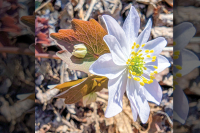
This works great, and I use this practice in taking photos of almost all the flowers I like to capture. That is, except for the windflower (Thalictrum thalictroides), a beautiful little spring ephemeral wildflower that most people would know by its other common name, rue-anemone. I like calling it windflower because it’s poetic and the slightest little breeze will cause it to shake and shiver.
That is why I violate my own given advice to take photos of windflower. Often lying prone on the forest floor, I will line up my shot of rue-anemone, take in the long slow breath and then snap the pic while holding my breath. Even my breath would make the image blurry, and that just won’t do.
The windflower quivers in the breeze because it has a large, central flower and two, sometimes three or four, smaller lateral flowers all held aloft on a skinny, central stalk. This causes the plant to be top-heavy and ready to dance and sway in any wind, even a breath.
Windflower mostly blooms white, but I have seen some showing shades of lavender and pink. As mentioned, there is one large central flower with smaller flowers displayed to the sides of this central bloom. There are what appear to be between five and 10 petals on each flower, but they technically aren’t petals but modified, colored sepals. A sepal is a part of the flower that covers and protects the unopened bud and holds and supports the open flower from below. Sepals are usually green and look like leaves. In the case of windflower, they serve as petals, helping to attract pollinating insects to the central flowers where the pollen is produced.
The full Latin name of this plant is interesting. Thalictrum is the genus. There are nine members of this genus found in North Carolina, and all but one are found in mountain counties. Eight of the nine species of Thalictrum resemble each other and are referred to as meadow-rue, like early meadow-rue (T. dioicum) and tall meadow-rue (T. pubescence). The one species that looks like none of the others, making it easy to identify is the windflower, a.k.a. rue-anemone.
Related Items

The Joyful Botanist: Pussy willows

Spring series returns to The North Carolina Arboretum

Drought, yard burns raise wildfire risk

Name change resolution instigates discussion of identity within EBCI
This is hilarious to me, as the one standout of the Thalictrum genus is the species given the name Thalictrum thalictroides. In Botanical Latin, the suffix “oides” (pronounced as oy-deez) means “looks like.” Thalictroides would therefore mean “looks like Thalictrum, or meadow-rue.” That specific epithet, the second name in a species that follows the genus name, also shows up in the spring flower called blue cohosh (Caulophyllum thalictroides) because the leaves of blue cohosh resemble those of meadow-rue. They also kind of look like the small fronds of maidenhair ferns (Adiantum pedatum).
It’s funny that the one species of Thalictrum that looks like none of the others is given a name that basically means, “the Thalictrum that looks like Thalictrum.” And it doesn’t. Not at all. Why was that done, you might ask? I don’t know. That answer might just be blowing in the windflower.
(The Joyful Botanist leads weekly wildflower walks most Fridays and offers consultations and private group tours through Bigelow’s Botanical Excursions. This email address is being protected from spambots. You need JavaScript enabled to view it..)