The Joyful Botanist: World, lose strife
For the past few years, whenever I encounter the whorled loosestrife growing along a trail or roadside I have been saying its name out loud, and slowly. Like a prayer: “World, lose strife.”
Or so it sounds to my ears when said aloud. “World, lose strife.” And this world around us could use a lot less strife, that’s for sure.
The Joyful Botanist: Let this umbrella make you smile
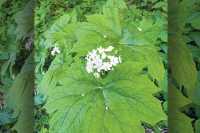
Were you suddenly stuck on a north facing hillside in the Blue Ridge mountains during a Summer thunderstorm and were without jacket or hood, in theory you could pull off the leaf of one of my favorite wildflowers, flip it upside down and wear it on your head like one of those cheesy umbrella hats — that is, if you are near to where the umbrella leaf grows.
Rose show returns to NC Arboretum
The Asheville-Blue Ridge Rose Society will host its annual Rose Exhibition at The North Carolina Arboretum in the Education Center from 9 a.m. to 5 p.m. May 24 and 25.
This two-day event showcases the diverse range of roses grown by Rose Society members and at local gardens.
The Joyful Botanist: Here grow pinkshells, far from the seashore
If you are driving or walking in the woods in the higher elevations of Western North Carolina at this time of year, you may be treated to the most beautiful explosion of deeply pink azalea flowers blooming in profusion all throughout the woods. And it’s not just any old azalea, but it’s a special and rare species that are often be taken for granted.
Haywood Master Gardeners host plant clinic
Do you have a gardening question? NC State Extension Master Gardener volunteers are available to answer your questions about lawns, vegetables, flowers, trees and ornamental plants; disease, insect, weed or wildlife problems; soils (including soil test results) and fertilizers; freeze and frost damage; and cultural and chemical solutions to pest problems.
Lake Junaluska plant sale offers new varieties
Lake Junaluska’s Spring Plant Sale will be 8 a.m. to 1 p.m. Saturday, May 3, at the Nanci Weldon Memorial Gym.
For sale will be a few thousand plants, including an assortment of annuals, perennials, herbs and vegetables, hanging baskets and several varieties of native plants from the Corneille Bryan Native Garden, said Melissa Marshall, Lake Junaluska director of grounds.
Cherokee hosts heritage seed workshop
The Eastern Band of Cherokee Indians Extension office is hosting a workshop to teach people about the preservation of heirloom seeds.
Heirloom seeds help to ensure future generations maintain a reliable food supply, support financial self-reliance, preserve agricultural heritage and reflect cultural traditions.
The Joyful Botanist: Viola Blues
When seeking beautiful native wildflowers, I often travel and hike long distances to a special spot to see a rare beauty. Other times, it’s as easy as walking into the front yard.
Haywood County Master Gardeners offer plant clinic
The planting season is getting closer, and Master Gardeners are available to answer questions about lawns, vegetables, flowers, trees and ornamental plants; disease, insect, weed or wildlife problems; soils (including soil test results) and fertilizers; freeze and frost damage; and cultural and chemical solutions to pest problems.
The Joyful Botanist: Back into the briar patch
I got stuck thinking about plants in the genus Smilax after writing about them last time out. It is such a great genus of plants, and as I discussed in my last column, most people only see them as a nuisance. I think they might be one rank below yellow jackets (Vespula spp.) and poison ivy (Toxicodendron radicans) as the most despised organisms in the woods.