Amid Pisgah logging plans post-Helene, Forest Service shuts out public
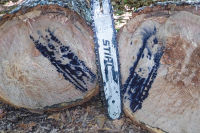
In early April, a U.S. Forest Service office in East Tennessee’s Cherokee National Forest issued a memo inviting the public to weigh in on its recovery operations in the wake of Tropical Storm Helene. The storm had felled trees across tens of thousands of acres of the forest, the agency said, and those trees posed the risk of fueling wildfires.
Conservation access plan public session rescheduled
The N.C. Wildlife Resources Commission (NCWRC) invites the public to attend upcoming forums to discuss implementation of a Conservation Access Pass currently under consideration.
Conservation plan coming for Jackson
Jackson County is embarking on a conservation plan with goal of protecting certain tracts of land.
“Jackson County is, from a natural resources perspective, a phenomenal county,” said Owen Carson, senior ecologist at Equinox Environmental in a presentation to commissioners Feb. 4.
FIND Outdoors announces 2025 job opportunites
FIND Outdoors, a nonprofit organization dedicated to promoting outdoor education, recreation and conservation, announced a variety of seasonal and full-time job opportunities for the 2025 season.
Highlands-Cashiers Land Trust conserves 54.45 acres of forested land
The Highlands-Cashiers Land Trust (HCLT) announced the permanent conservation of 54.45 acres of forested land just two miles from downtown Highlands. Located along the majority of the lefthand side of Glen Falls Road, this pristine property is a vital part of the area’s natural beauty and ecological health.
HCLT to conserve 100 acre tract of pristine land in Cashiers
Highlands-Cashiers Land Trust (HCLT) is under contract on 100 acres of raw and pristine land in Cashiers. Fully surrounded by U.S. Forest Service land, this property is visible from Whiteside Mountain and protects streams in the Chattooga watershed.
HCC hosts conservation heritage event
Haywood Community College, in partnership with the North Carolina Wildlife Resources Commission are hosting an event on the campus of Haywood Community College to celebrate our national conservation heritage.
Celebrate National Hunting and Fishing Day
The N.C. Wildlife Resources Commission will host two family-friendly events to recognize National Hunting and Fishing Day, an annual celebration promoting outdoor recreation and conservation.
Smokies Life publishes George Masa biography
Smokies Life has announced the publication of “George Masa: A Life Reimagined,” the first comprehensively researched biography of the visionary Japanese photographer whose dedication to art and conservation helped spur the national park movement in the Great Smoky Mountains, as well as the creation of the Appalachian Trail.
Highlands to host native plant symposium
Highlands Biological Station is excited to announce the 2024 Native Plant Symposium, scheduled for Sept. 13-14. This two-day event will be packed with engaging presentations, tours, auctions and more, all centered around the beauty and importance of native plants.